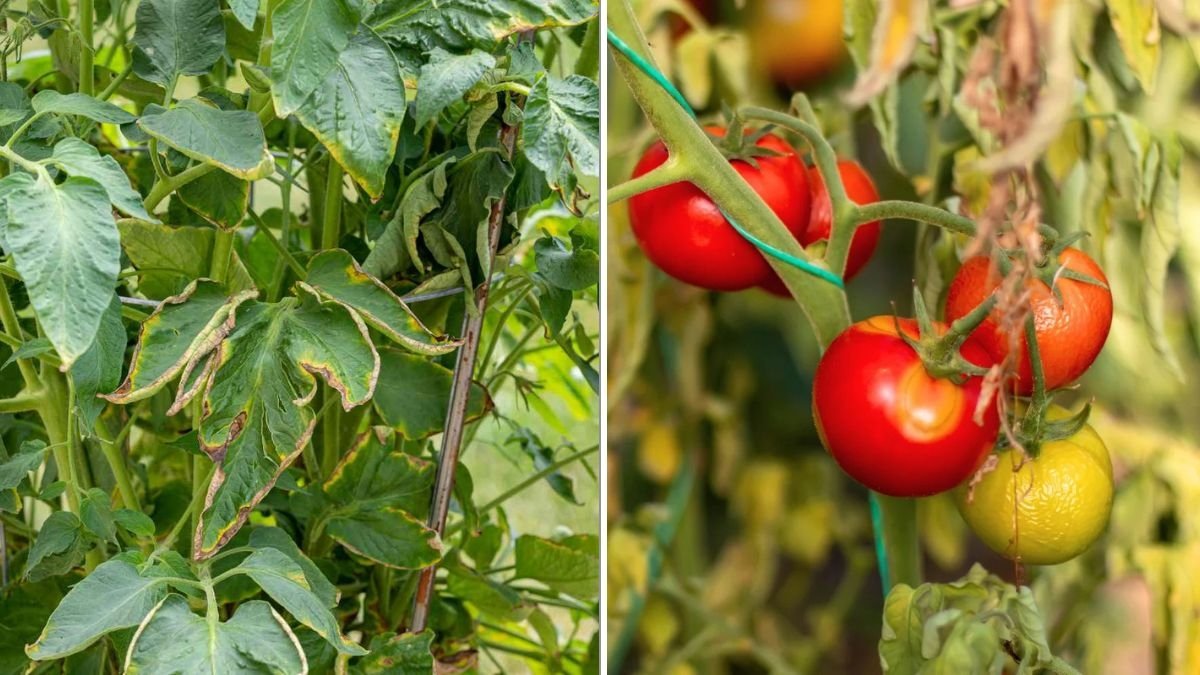
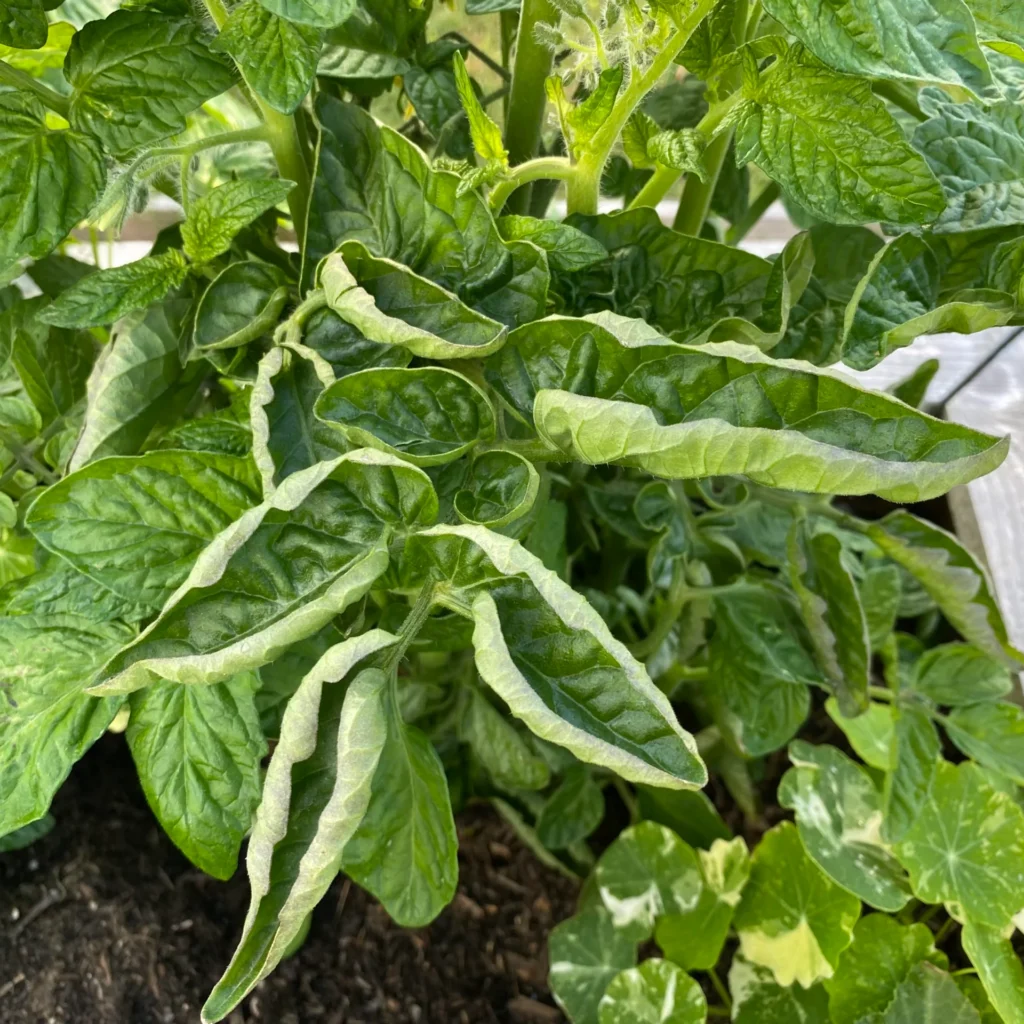
Few things are as satisfying as seeing your tomato plants thrive—lush green leaves, strong stems, and clusters of blossoms promising future fruit. But if you’ve noticed your tomato leaves curling, twisting, or cupping inward, it’s a sign that your plants are under stress.
Leaf curl is a common issue, and while it can look alarming, it doesn’t always mean disaster. The trick is understanding why it’s happening and how to fix it before your plants stop growing or producing fruit.
Here are 7 common reasons your tomato leaves curl—and what you can do to bring them back to health.
1. Environmental Stress (Weather and Sun)
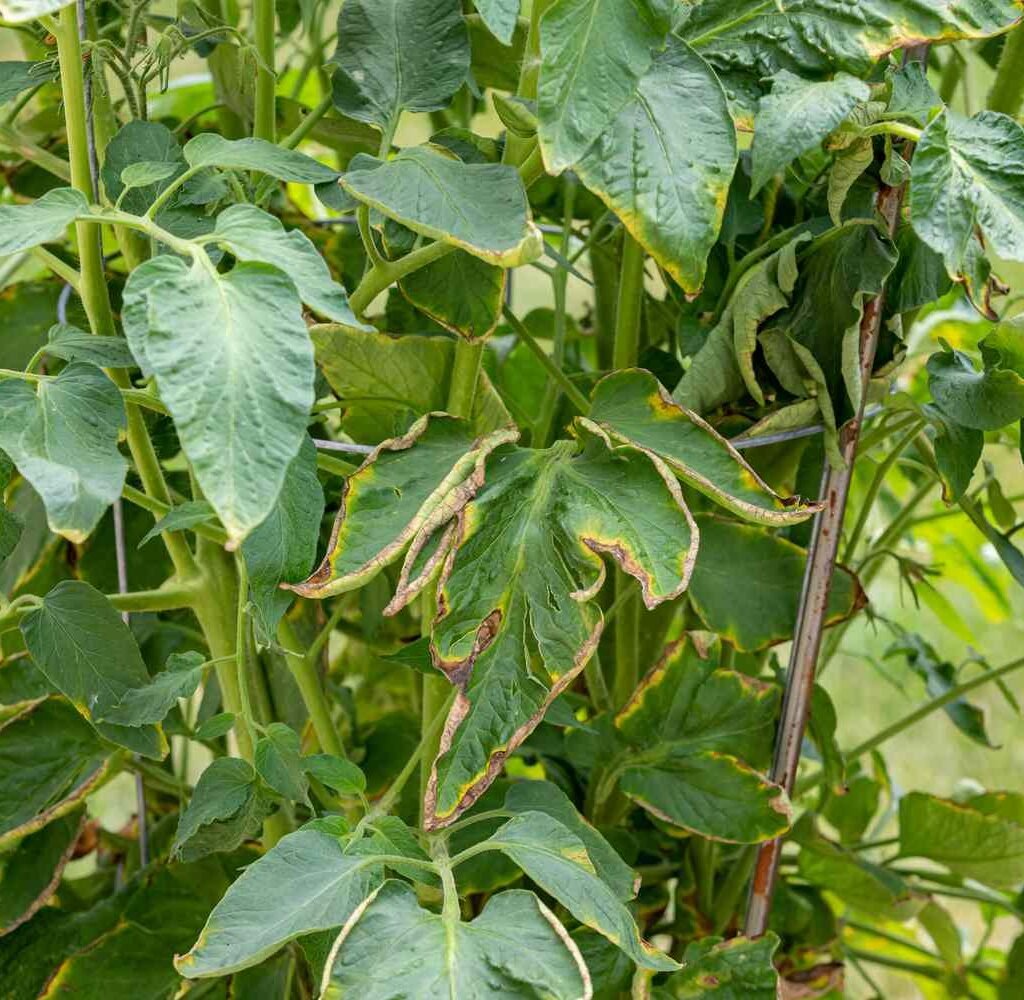
Tomatoes love warm weather, but they don’t handle extremes well. Sudden changes in temperature, strong winds, or intense sunlight can cause leaves to curl as a form of self-protection.
When the air is hot and dry, the plant loses moisture faster than it can replace it. To conserve water, tomato leaves curl upward or inward, reducing surface area and slowing evaporation.

How to Identify It:
- Leaves curl during the hottest part of the day but flatten out in the evening.
- No yellowing or spotting—just rolling leaves.
What To Do:
- Water deeply: Ensure consistent moisture 6–8 inches deep.
- Mulch the soil: A 2–3 inch layer of straw, compost, or shredded leaves helps retain water.
- Provide shade: Use shade cloth or plant taller crops nearby to reduce heat stress.
- Avoid overhead watering: Water the base to minimize leaf evaporation.
Pro Tip: Environmental leaf curl usually corrects itself once the weather stabilizes—so don’t panic!
2. Irregular Watering (Too Much or Too Little)
Tomatoes are moisture-sensitive plants. Inconsistent watering—letting the soil swing between soggy and bone dry—can stress the roots, causing the leaves to curl inward or downward.
How to Identify It:
- Lower leaves start curling first.
- Wilting during the day despite recent watering.
- Cracked or split fruits in severe cases.
What To Do:
- Keep soil evenly moist. Don’t let it completely dry out between waterings.
- Water early in the morning, allowing plants to absorb moisture before heat sets in.
- Use drip irrigation or soaker hoses for steady moisture delivery.
- Add organic mulch to buffer soil moisture fluctuations.
Consistent watering is the simplest way to prevent leaf curl and improve overall tomato health.
3. Excess Nitrogen or Nutrient Imbalance
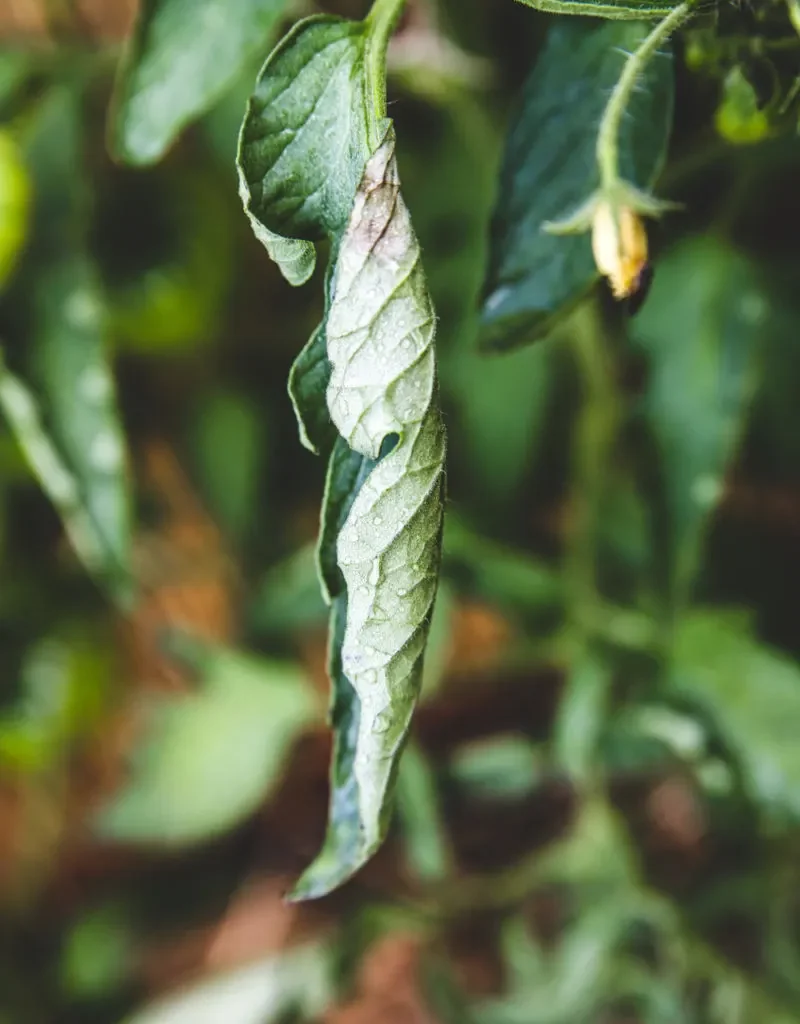
Fertilizing is essential—but overdoing it can harm more than help. Too much nitrogen encourages lush, leafy growth, often at the expense of flowers and fruit. Those overfed leaves can curl, twist, and look unnaturally dark green.
How to Identify It:
- Thick, dark green foliage with inward curling leaves.
- Lots of stems and leaves but few blossoms.
What To Do:
- Switch to a balanced fertilizer (5-10-10 or 4-6-8).
- Stop adding manure or high-nitrogen feed temporarily.
- Flush excess nutrients: Water thoroughly to help leach extra fertilizer salts.
- Add compost or aged organic matter to balance soil nutrients.
Remember: tomato plants need phosphorus and potassium for strong roots and fruit—not just nitrogen for leaf growth.

4. Herbicide Drift or Chemical Damage
Even if you don’t spray herbicides yourself, nearby lawns, fields, or neighbors might. Airborne herbicides like 2,4-D or glyphosate can drift through the air and affect sensitive crops such as tomatoes.
These chemicals interfere with plant hormones, leading to distorted, curling, or twisted leaves.
How to Identify It:
- New leaves appear narrow, tightly curled, or cup upward.
- Leaf veins may thicken or twist.
- Damage often appears uneven—only on one side of the plant or garden.
What To Do:
- Remove affected leaves if damage is mild.
- Water thoroughly to flush residues from the soil.
- Avoid using grass clippings treated with herbicides as mulch.
- If exposure is severe, you may need to remove and replace contaminated soil.
To prevent future drift, ask neighbors to spray only on calm days and establish windbreaks or barriers between your garden and nearby sprayed areas.
5. Pests: Aphids, Whiteflies, and Thrips
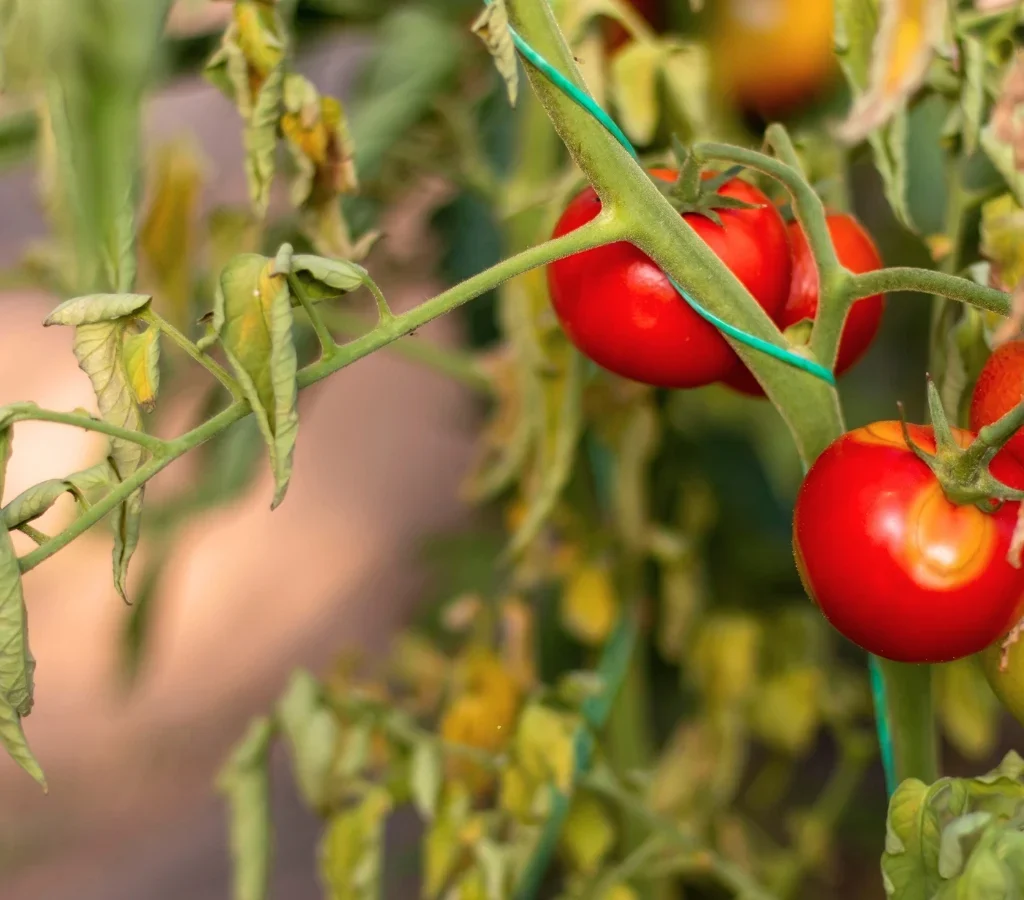
Tiny sap-sucking insects like aphids and whiteflies are common culprits behind curling tomato leaves. These pests feed on plant juices, causing distortion and transmitting viruses.
How to Identify It:
- Curling and sticky, shiny leaves (from honeydew secretions).
- Visible clusters of tiny green, black, or white bugs under the leaves.
- Ants crawling around plants—often feeding on pest honeydew.
What To Do:
- Spray with neem oil or insecticidal soap every 5–7 days until pests disappear.
- Encourage beneficial insects like ladybugs and lacewings.
- Inspect regularly: Early detection is key.
- Avoid broad-spectrum pesticides that can kill pollinators and beneficial bugs.
Keeping pests in check not only prevents leaf curl but also reduces the spread of viral diseases.

6. Viral or Fungal Infections
If leaf curling comes with discoloration, mosaic-like patches, or stunted growth, your plant may have a disease rather than an environmental issue.
Common Viral Diseases:
- Tomato Yellow Leaf Curl Virus (TYLCV): Causes severe leaf curling and yellowing, spread by whiteflies.
- Tomato Mosaic Virus: Leads to mottled, distorted leaves and poor fruiting.
Fungal Diseases:
- Root-related fungal infections like Fusarium or Verticillium wilt can cause leaves to curl and droop.
How to Identify It:
- Leaves curl upward and turn pale or yellow.
- Plant appears weak even with proper watering.
- Infected plants stop producing flowers and fruit.
What To Do:
- Remove and destroy infected plants—don’t compost them.
- Disinfect tools and stakes before using them again.
- Use disease-resistant tomato varieties labeled “VFN” (resistant to Verticillium, Fusarium, and Nematodes).
- Rotate crops annually and avoid planting tomatoes in the same spot for at least 2 years.
Prevention is the best defense—once viral infection sets in, there’s no cure.
7. Pruning, Transplant, or Root Stress
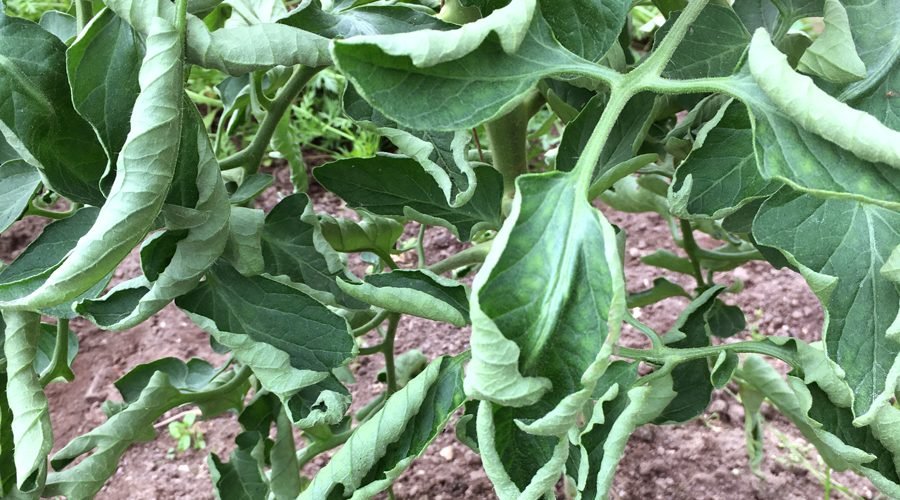
Overhandling tomato plants can lead to leaf curl, especially after heavy pruning or transplanting. When roots are disturbed or too many leaves are removed, the plant goes into “survival mode.”
How to Identify It:
- Curling occurs right after transplanting or pruning.
- Upper leaves may look healthy while lower ones curl inward.
What To Do:
- Harden off seedlings before transplanting to help them adjust to outdoor conditions.
- Water immediately after transplanting to reduce shock.
- Avoid excessive pruning—remove only leaves touching the ground or blocking airflow.
- Apply a balanced organic fertilizer a week after transplanting to support root recovery.
Given time, the plant usually rebounds on its own once it adapts.
Bonus: Physiological Leaf Curl (No Real Problem!)
Sometimes tomato leaves curl naturally—especially in vigorous, indeterminate varieties. Known as physiological leaf curl, this harmless condition often occurs in fast-growing plants during warm weather or after heavy rains.

How to Identify It:
- Leaves curl upward slightly but remain green and healthy.
- The plant continues growing and fruiting normally.
What To Do:
Absolutely nothing! It’s just your tomato adjusting to conditions. Maintain steady care and enjoy your harvest.
Quick Diagnosis Chart
| Cause | Typical Symptoms | Solution |
|---|---|---|
| Heat or wind stress | Upward curl, normal color | Mulch, water deeply, provide shade |
| Irregular watering | Wilting, lower leaf curl | Keep soil evenly moist |
| Too much nitrogen | Thick, dark leaves | Reduce fertilizer, flush soil |
| Herbicide drift | Twisted, narrow leaves | Water deeply, avoid exposure |
| Pests | Sticky leaves, visible insects | Neem oil or insecticidal soap |
| Virus or fungus | Yellowing, stunted growth | Remove infected plants |
| Transplant stress | Curl after moving | Gentle care, consistent watering |
Preventing Tomato Leaf Curl: Long-Term Tips
- Water wisely: Deeply and consistently.
- Feed moderately: Balanced nutrients promote steady growth.
- Mulch regularly: Keeps soil cool and moist.
- Inspect weekly: Catch pests and diseases early.
- Support plants: Use cages or stakes to prevent breakage.
- Rotate crops: Avoid replanting tomatoes in the same spot yearly.
- Grow resilient varieties: Choose those bred for your climate and region.
Final Thoughts
Tomato leaf curl might look alarming, but in most cases, it’s your plant’s way of saying, “I’m under stress.” The key is to observe, diagnose, and act calmly rather than overcorrecting.
With steady watering, balanced feeding, and a watchful eye for pests, your tomato plants can recover and flourish.
Remember—healthy leaves mean healthy fruit. By keeping your plants comfortable and stable, you’ll enjoy a bountiful harvest of juicy, vibrant tomatoes all season long.

Leave A Comment