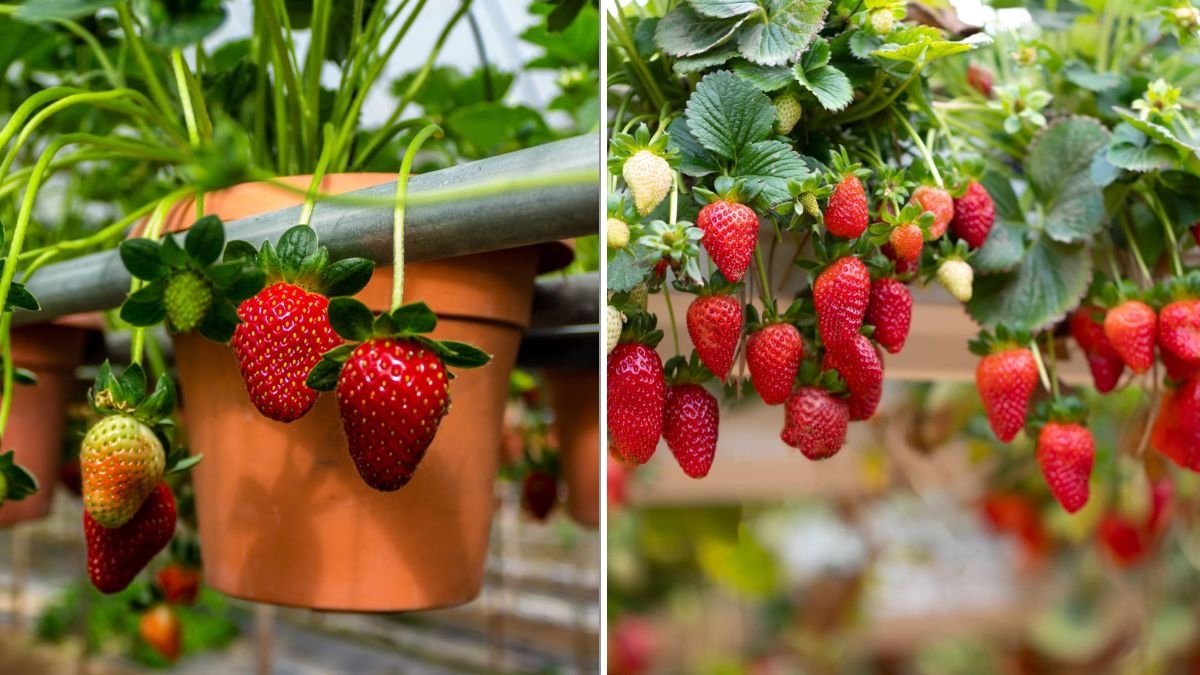
Few things taste better than freshly picked strawberries—sweet, juicy, and sun-warmed. But what if you don’t have space for a garden bed? The good news: strawberries are one of the easiest fruits to grow in containers, and they thrive beautifully in hanging baskets. Whether you live in an apartment with a small balcony or simply want to add a touch of greenery (and flavor) to your patio, hanging strawberry baskets are a practical and charming solution.
Here’s everything you need to know—from choosing the right variety to keeping your plants happy and productive all season long.
Why Grow Strawberries in Hanging Baskets?
Growing strawberries in hanging baskets isn’t just about saving space—it’s about creating the perfect growing environment.
- Better Air Circulation: Hanging baskets improve airflow around plants, reducing the risk of fungal diseases like gray mold and powdery mildew.
- Fewer Pests: Elevating your plants keeps them out of reach of slugs, snails, and some ground-dwelling insects.
- Aesthetic Appeal: Cascading vines laden with red fruit look absolutely stunning on balconies, porches, or garden pergolas.
- Convenient Harvesting: No bending, stooping, or weeding—just reach up and pluck your berries straight from the vine.
Step 1: Choose the Right Strawberry Variety
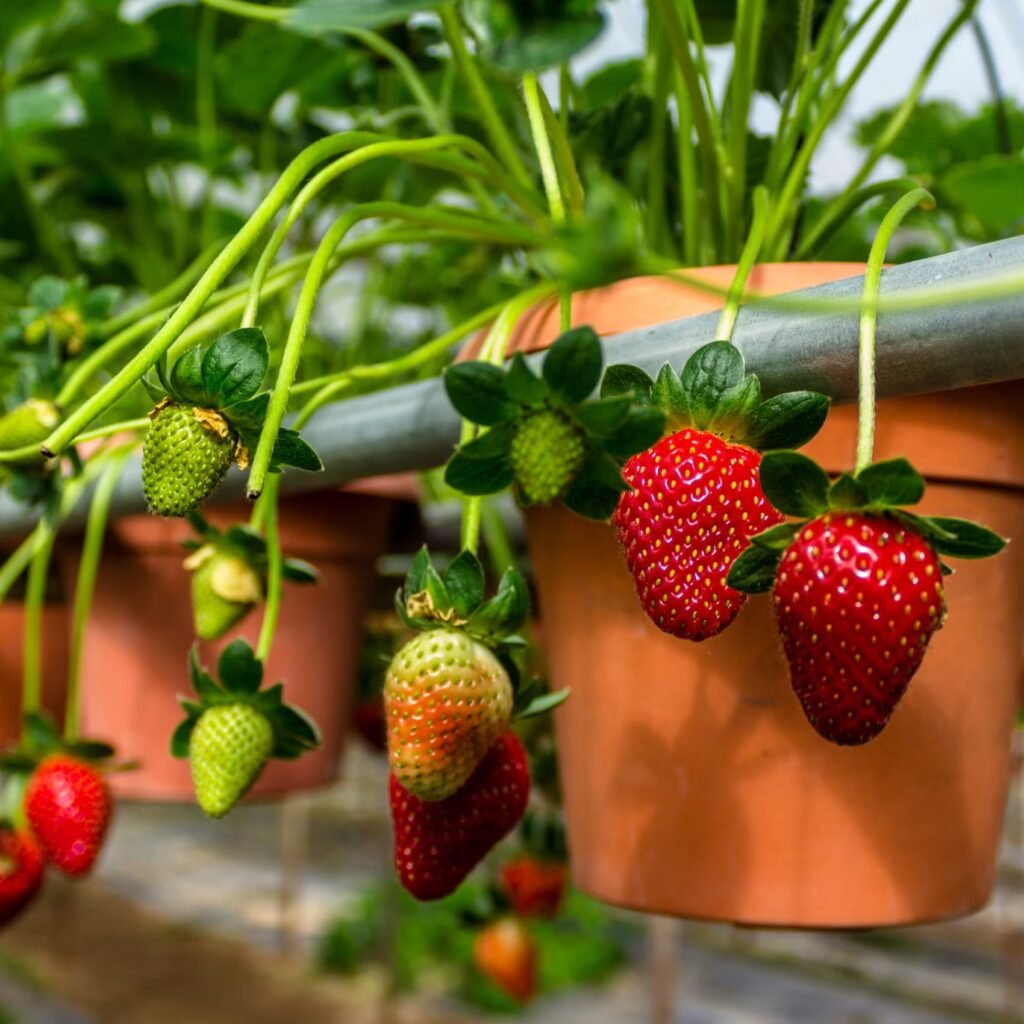
Not all strawberries perform equally well in containers. For hanging baskets, choose varieties that are compact, vigorous, and produce fruit throughout the season.
Best Varieties for Hanging Baskets:
- ‘Temptation’ – A heavy-bearing, everbearing type with small, sweet berries.
- ‘Tristar’ – Produces firm, flavorful fruit from early summer to fall.
- ‘Albion’ – Known for large, juicy, cone-shaped berries and great disease resistance.
- ‘Toscana’ – A showstopper with pink blooms and decorative, sweet fruit.
- ‘Seascape’ – Ideal for warmer climates, with continuous production all season long.
Tip: Go for everbearing or day-neutral varieties—they’ll reward you with multiple harvests rather than a single flush.

Step 2: Pick the Right Basket and Setup
The container you choose can make a big difference in your success.
Basket Size:
- Opt for at least a 12-inch diameter basket to provide ample space for roots and moisture retention.
- Larger baskets (14–16 inches) allow for more plants and healthier growth.
Material:
- Wire baskets lined with coconut coir or sphagnum moss provide excellent drainage and an organic look.
- Plastic hanging baskets retain moisture better in hot, dry climates.
Drainage:
- Strawberries hate soggy soil. Make sure your basket has good drainage holes to prevent root rot.
Placement:
- Choose a location that receives at least 6–8 hours of full sunlight daily. South- or west-facing balconies or patios are ideal.
Step 3: Prepare the Perfect Soil Mix
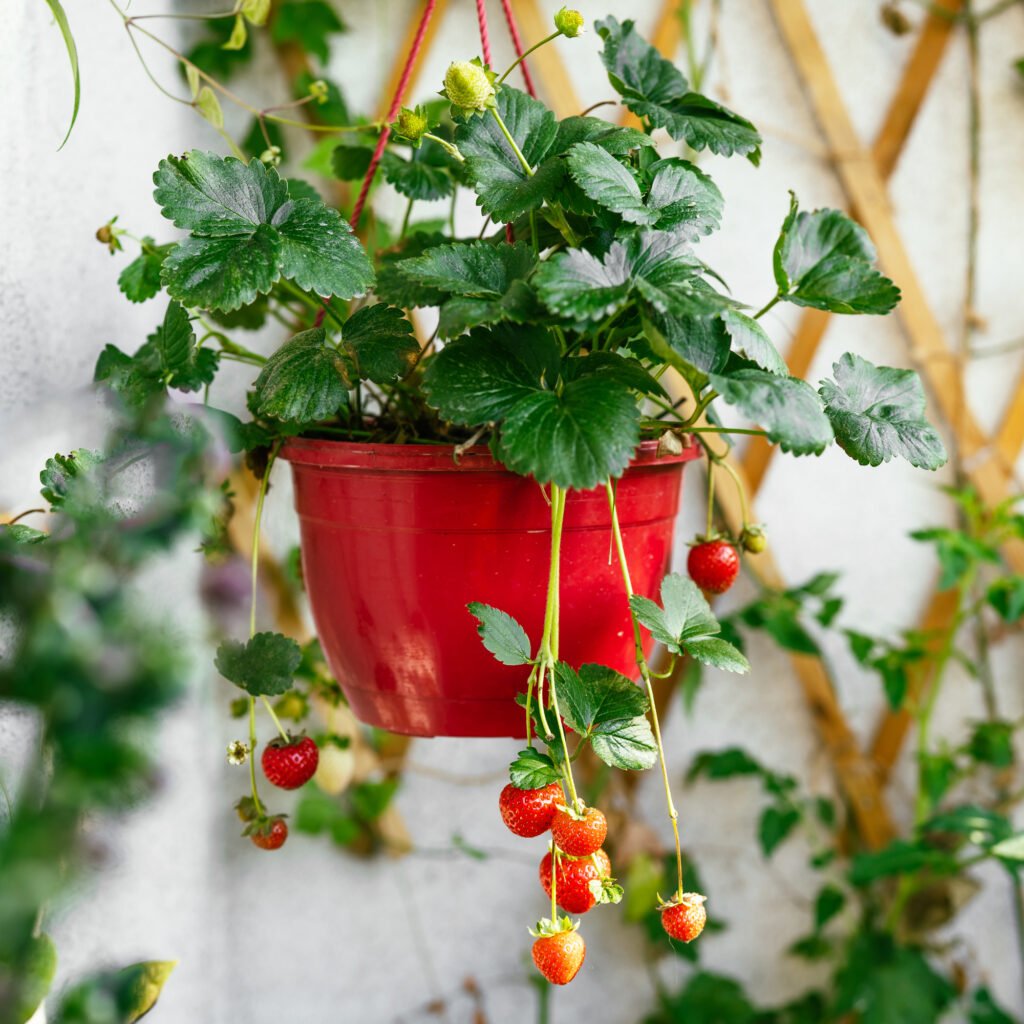
Strawberries love light, fertile soil that drains well but still holds moisture.

Ideal Potting Mix:
- 2 parts high-quality potting soil
- 1 part compost (for nutrients)
- 1 part perlite or vermiculite (for drainage)
Mix in a slow-release organic fertilizer or a balanced 10-10-10 formula before planting. You can also top-dress with compost every few weeks to keep nutrients replenished.
Avoid using garden soil—it’s too dense for containers and may contain pests or diseases.
Step 4: Planting Strawberries
- Soak bare-root plants in water for 30 minutes before planting to rehydrate them.
- Fill the basket about three-quarters full with your potting mix.
- Arrange 3–5 plants evenly around the edges of the basket so they can cascade outward as they grow.
- Cover roots completely but keep the crown (where leaves meet roots) just above the soil line to prevent rot.
- Water thoroughly after planting.
For extra visual appeal, you can also tuck in trailing herbs or flowers like thyme, nasturtiums, or alyssum—they’ll attract pollinators and add a pop of color.
Step 5: Watering and Feeding
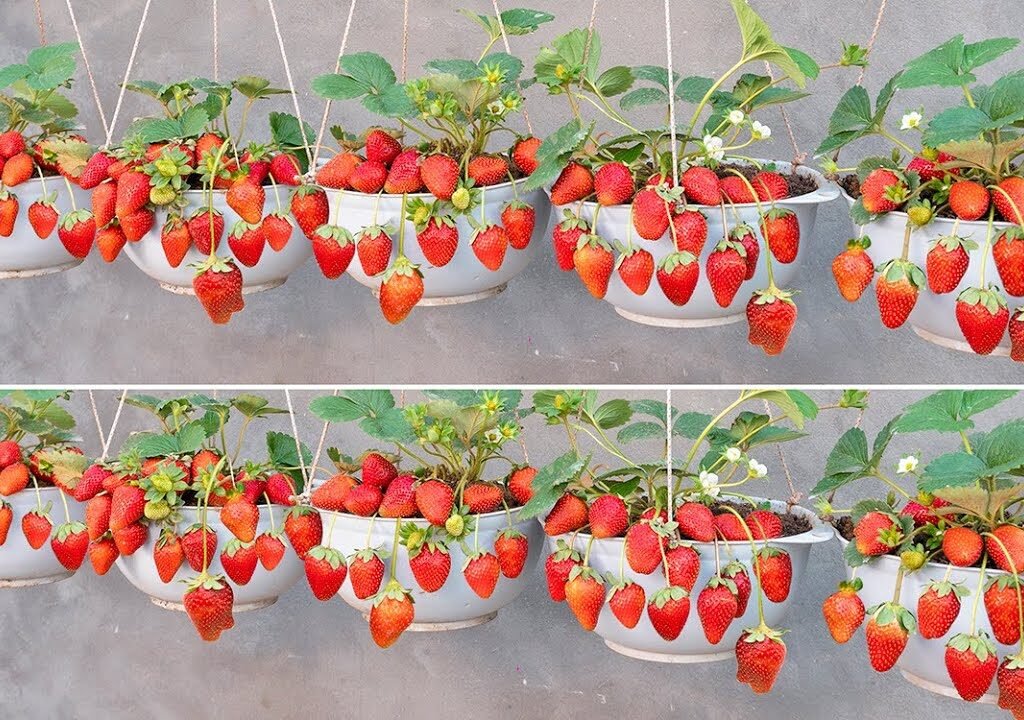
Hanging baskets dry out much faster than garden beds, so consistent moisture is key.
Watering Tips:

- Water daily in summer, especially during hot or windy conditions.
- Check soil moisture by sticking your finger 1 inch deep—the top layer should feel slightly damp.
- Avoid overhead watering to prevent fungal issues; water directly at the base of each plant.
Fertilizing Schedule:
- Feed every 2–3 weeks with a balanced liquid fertilizer or a diluted seaweed/fish emulsion solution.
- Stop fertilizing about 2 weeks before harvest for the best flavor concentration.
Step 6: Sunlight and Temperature
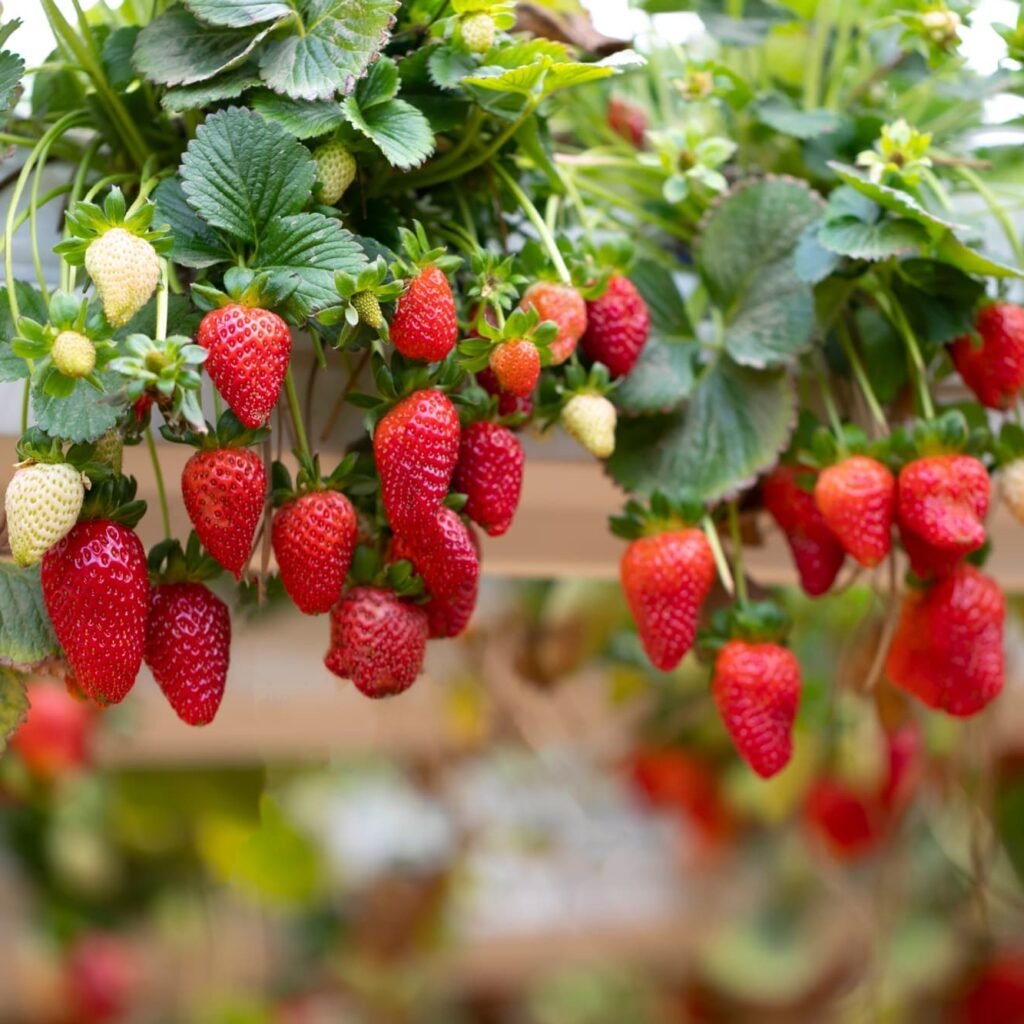
Strawberries need plenty of sun to produce those sweet, ruby-red berries.
- Provide 6–8 hours of full sunlight daily.
- If you’re growing indoors or on a shaded balcony, consider using a grow light to supplement natural light.
- Ideal temperature range: 60°F to 80°F (15°C–27°C).
- During extreme heat, move the basket to a partially shaded spot to prevent scorched leaves.
Step 7: Maintenance and Care
Pruning:
- Remove yellowing or dead leaves regularly to maintain airflow and prevent disease.
- Snip off runners (long trailing stems) unless you want to propagate new plants.
Pollination:
- Outdoors, bees and butterflies handle pollination.
- Indoors or in sheltered areas, gently tap the flowers or use a soft paintbrush to transfer pollen.
Pest Control:
- Watch for aphids, spider mites, and whiteflies. Use neem oil spray or insecticidal soap as needed.
- To deter birds, drape bird netting over the basket once fruit starts ripening.
Step 8: Harvesting Your Strawberries
Nothing compares to the joy of picking your own ripe, sun-kissed berries.

When to Harvest:
- Wait until berries are fully red, plump, and fragrant—color indicates ripeness.
- Pick every 2–3 days to encourage continued fruiting.
How to Harvest:
- Gently twist the berry at the stem instead of pulling it to avoid damaging the plant.
- Eat fresh or refrigerate immediately—homegrown strawberries don’t last long because they’re free from preservatives.
Pro tip: Freshly picked strawberries are perfect for topping yogurt, blending into smoothies, or making small-batch jam.
Step 9: Overwintering Your Strawberry Plants
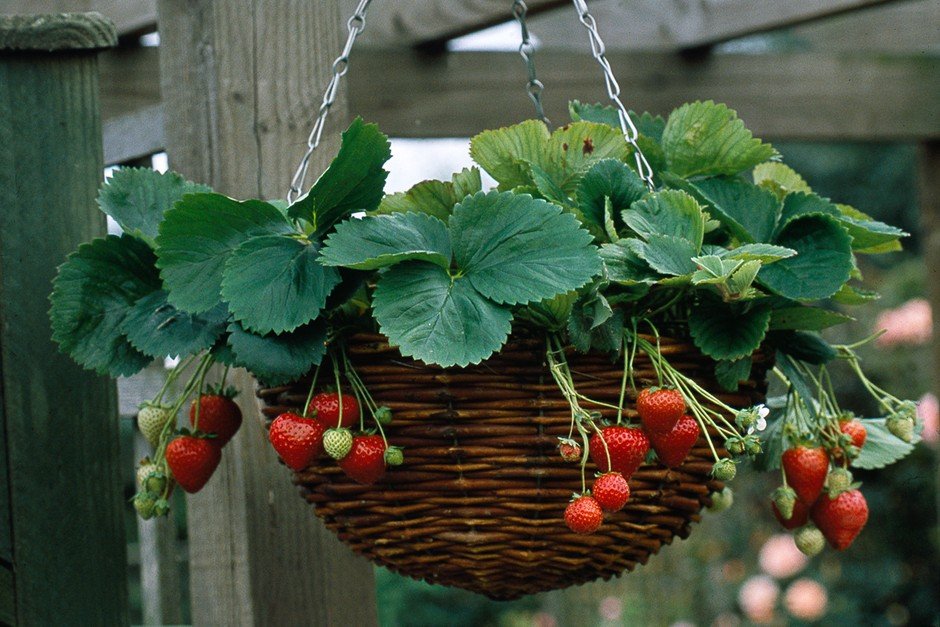
If you live in a region with cold winters, don’t toss your plants after summer. With a little care, you can overwinter them for another fruitful season.
Here’s how:
- Trim away dead leaves and runners after the last harvest.
- Move baskets to a sheltered, frost-free area like a garage or greenhouse.
- Water sparingly during dormancy—just enough to keep the soil from drying out.
- In early spring, move them back outdoors and resume feeding.
Bonus: Creative Hanging Basket Ideas
- Tiered strawberry towers: Stack multiple baskets vertically for a stunning display.
- Wall-mounted planters: Great for small balconies or patios.
- Mix and match: Combine strawberries with trailing mint, petunias, or marigolds for beauty and practicality.
Final Thoughts
Growing strawberries in hanging baskets is an easy, rewarding project for gardeners of all levels. With the right care, your plants will reward you with months of sweet, aromatic berries and lush greenery that brightens up any space.
Whether you’re a city dweller with limited square footage or a country gardener looking to maximize yield, hanging baskets prove that you don’t need a big backyard to enjoy the freshest fruit.
So grab a basket, plant your favorite variety, and get ready to enjoy homegrown strawberries—right from your balcony to your breakfast table.

Leave A Comment