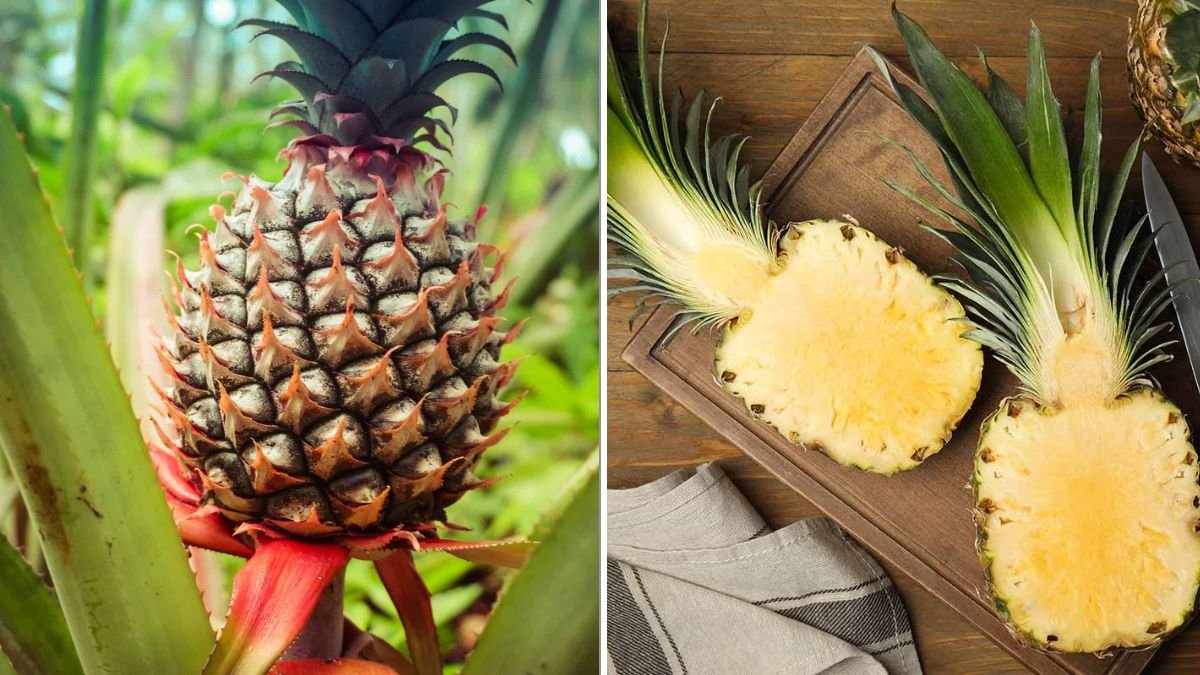
Imagine stepping into your living room and seeing a spiky, green pineapple plant soaking up sunlight from the window—its tropical leaves adding instant warmth and charm to your home. Even better? After some patience, you might harvest your very own golden pineapple right from your indoor garden.
It may sound ambitious, but growing pineapples indoors is entirely possible. Pineapple plants are surprisingly resilient, low-maintenance, and adaptable to container life. All you need is a sunny spot, a bit of care, and some tropical patience. Here’s your complete guide to growing pineapples indoors—from selecting the right fruit to enjoying your homegrown harvest.
Why Grow Pineapples Indoors?
Before you dive in, here’s why indoor pineapple gardening is worth your time:
- Tropical Beauty Year-Round: The pineapple’s sword-like leaves bring a touch of the tropics to any space.
- Low Maintenance: Pineapples are drought-tolerant and don’t need constant attention.
- Fun Project: Regrowing a plant from a store-bought pineapple top feels like magic.
- Fresh Fruit Reward: With patience, your plant can produce a small but delicious pineapple right in your home.
Even if you live in a cooler climate, pineapples can thrive indoors with the right care.
Step 1: Choose a Healthy Pineapple
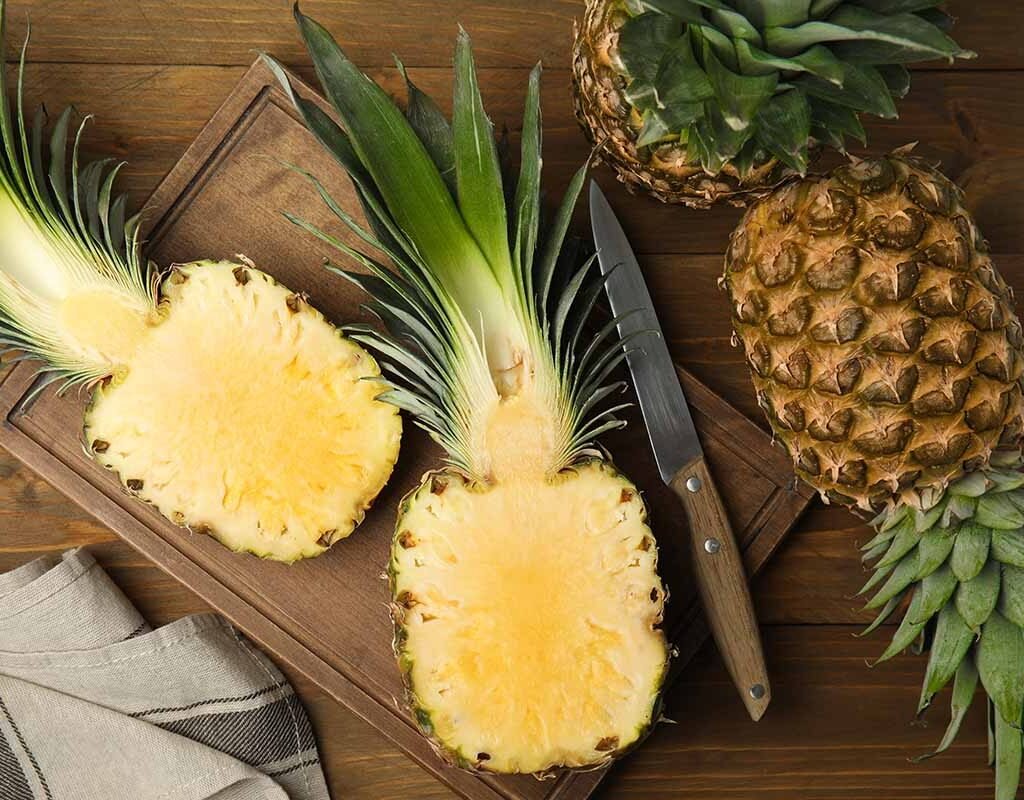
Your journey starts at the grocery store or local market.
What to look for:
- Pick a pineapple with healthy, green leaves—no brown tips or rot.
- The fruit should be ripe but firm, with a golden-yellow skin and sweet aroma.
- Avoid pineapples that are overripe or have soft spots.
Step 2: Prepare the Pineapple Top
Once you’ve enjoyed the fruit, it’s time to turn the crown into a new plant.

Here’s how:
- Twist off or cut the top crown about an inch below the leaves.
- Remove the lower leaves (about 1 inch from the base) to expose the stem.
- Check for any brown, soft, or moldy spots—trim them off.
- Allow the crown to dry for 2–3 days in a warm, airy spot.
- This helps the cut end heal and prevents rotting when planted.
Step 3: Rooting the Pineapple Crown
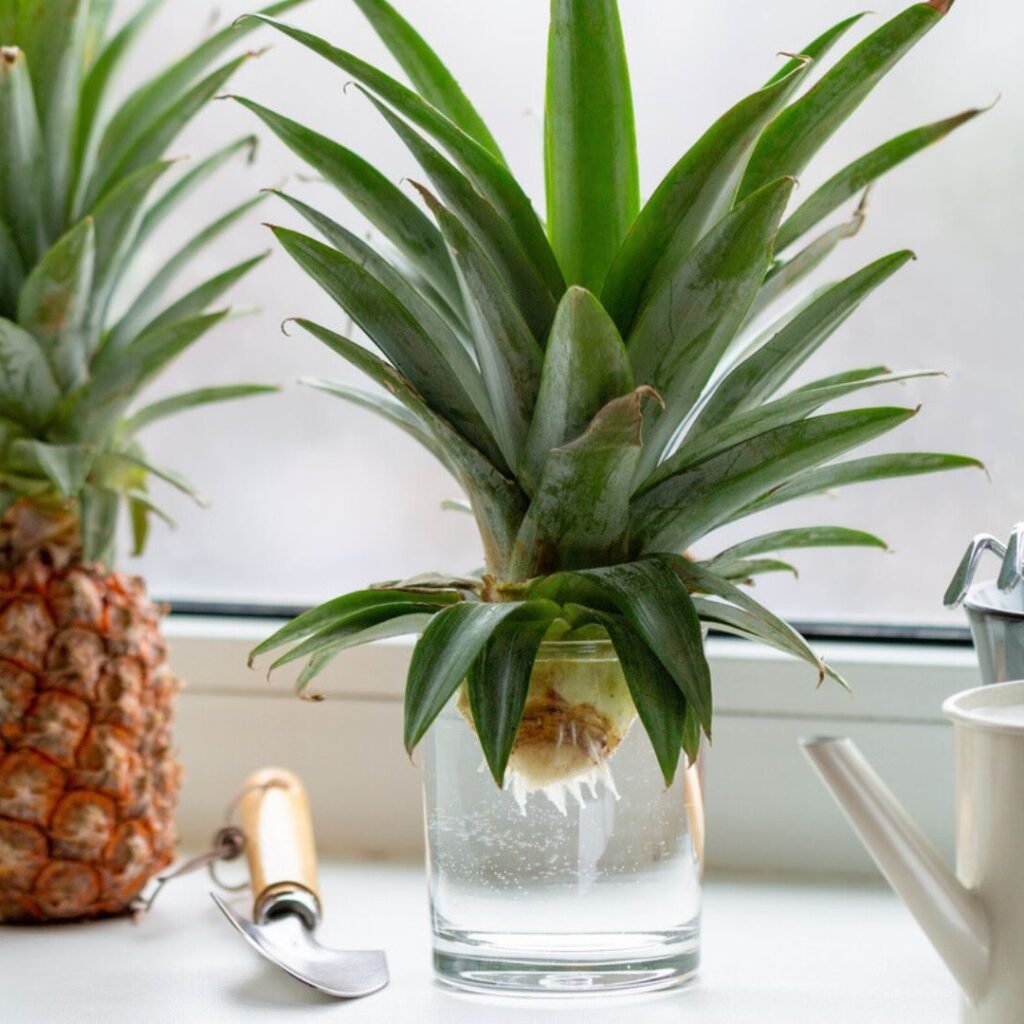
Before planting, it’s best to root your pineapple crown in water.
Steps for rooting:
- Fill a glass or jar with water—just enough to cover the stem, not the leaves.
- Place the crown in the jar, using toothpicks to keep the leaves above water.
- Set the jar in a bright, warm spot (like a sunny windowsill).
- Change the water every 2–3 days to keep it fresh.
In 2–3 weeks, you’ll start to see roots forming—thin, white strands extending from the base. When the roots reach about 2–3 inches long, your pineapple is ready to plant.
Step 4: Plant Your Pineapple
Pineapples love well-draining soil—they’re tropical plants that hate soggy roots.
Here’s what you’ll need:
- A 6–8 inch pot with drainage holes.
- A light, airy mix such as cactus or succulent potting soil.
- Optional: Add a handful of sand or perlite for extra drainage.
Planting process:

- Fill the pot with soil, leaving room for the crown.
- Plant the rooted crown so that the base is just below the soil surface.
- Gently press the soil around the plant to hold it upright.
- Water lightly until the soil is evenly moist (not wet).
Step 5: Find the Perfect Spot
Pineapples crave sunlight and warmth, mimicking their tropical origins.
Light:
- Place your plant in a south- or west-facing window that receives at least 6–8 hours of direct sunlight daily.
- If natural light is limited, use a grow light to supplement—especially during winter months.
Temperature:
- Ideal range: 65°F–85°F (18°C–29°C).
- Avoid cold drafts and temperatures below 60°F (15°C), which can stunt growth.
Step 6: Watering and Feeding
Pineapples are drought-tolerant, but consistent care helps them thrive.
Watering tips:
- Water only when the top 2 inches of soil feel dry.
- Pour water directly into the soil and the center rosette (leaf cup).
- Always ensure the pot drains well—standing water causes root rot.
Fertilizing tips:
- Feed every 2–3 weeks during spring and summer using a balanced liquid fertilizer (10-10-10) diluted to half strength.
- Stop fertilizing in fall and winter when growth slows.
Step 7: Caring Through the Seasons
Growing pineapples indoors is mostly about patience. Here’s what to expect:

First Year:
- Your plant focuses on growing strong leaves and roots.
- Keep it warm, well-lit, and slightly dry between waterings.
Second Year:
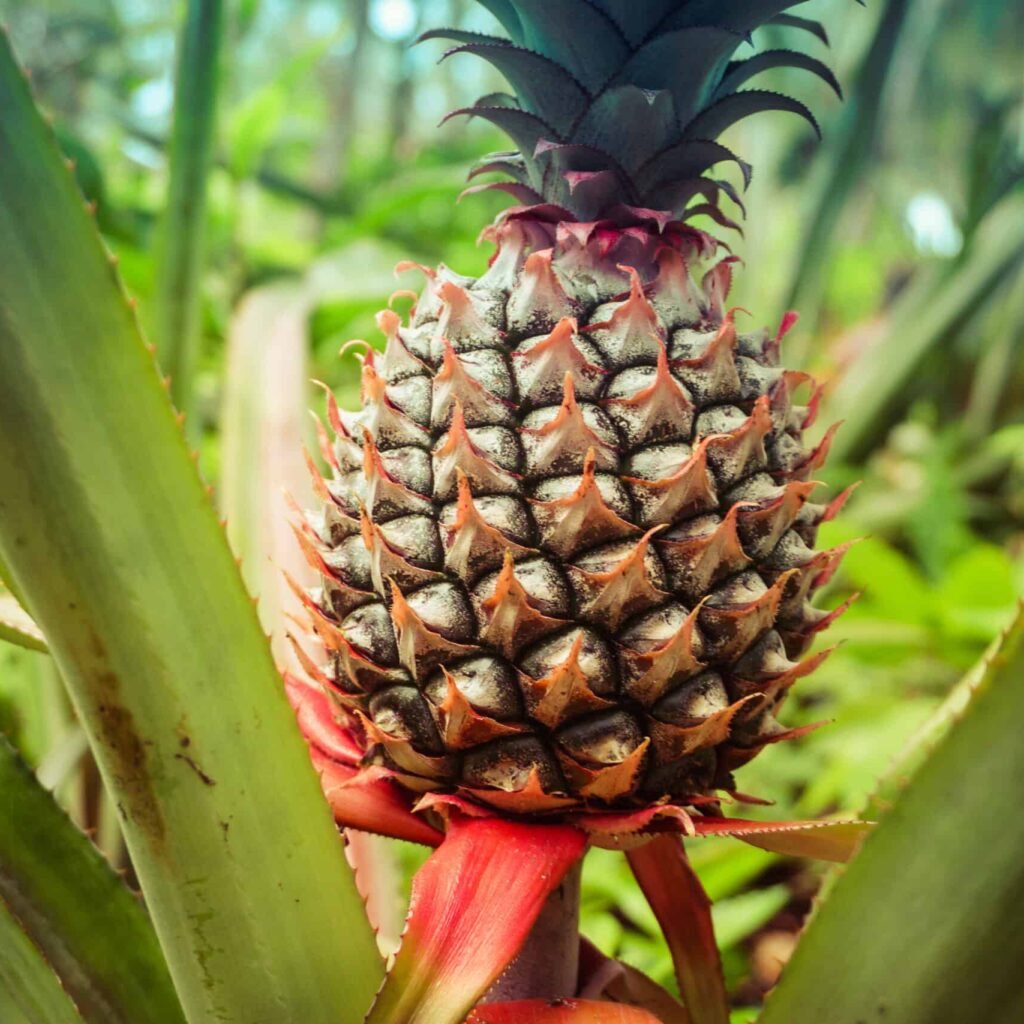
- You might notice a central flower stalk forming—it’s the beginning of your fruit!
- The small purple flowers will eventually form a tiny pineapple at the center.
Fruit Development:
- The pineapple takes 6–8 months to mature fully.
- You’ll know it’s ripe when it turns golden and gives off a sweet aroma.
Step 8: Encouraging Your Pineapple to Fruit
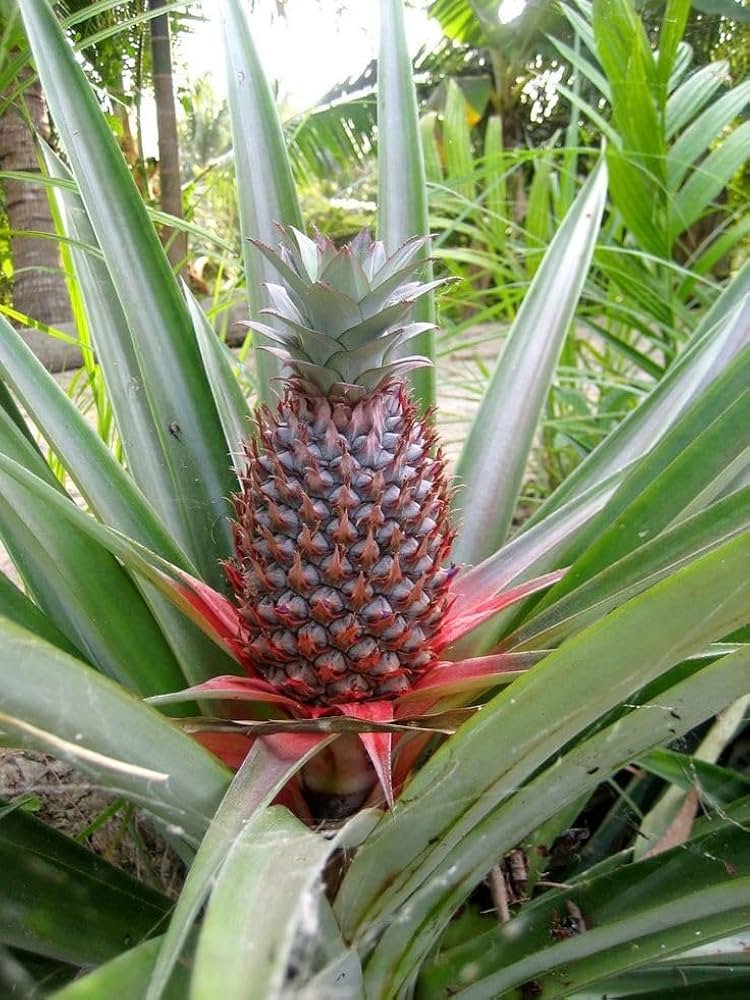
Some plants take longer to flower indoors. If yours seems reluctant after two years, try this gentle trick used by tropical gardeners:
The Ethylene Gas Method
- Place your pineapple plant in a clear plastic bag.
- Add a ripe apple or banana inside the bag.
- Seal it loosely and leave it for a week.
- Ethylene gas from the fruit triggers flowering naturally.
After a few weeks, you may spot a tiny red or pink bud forming—it’s the start of your pineapple!
Step 9: Harvesting Your Indoor Pineapple
When your pineapple turns golden and fragrant, it’s ready.

How to harvest:
- Twist the fruit gently from the stalk—it should come off easily.
- Allow it to ripen for a day or two at room temperature for peak sweetness.
Step 10: After the Harvest
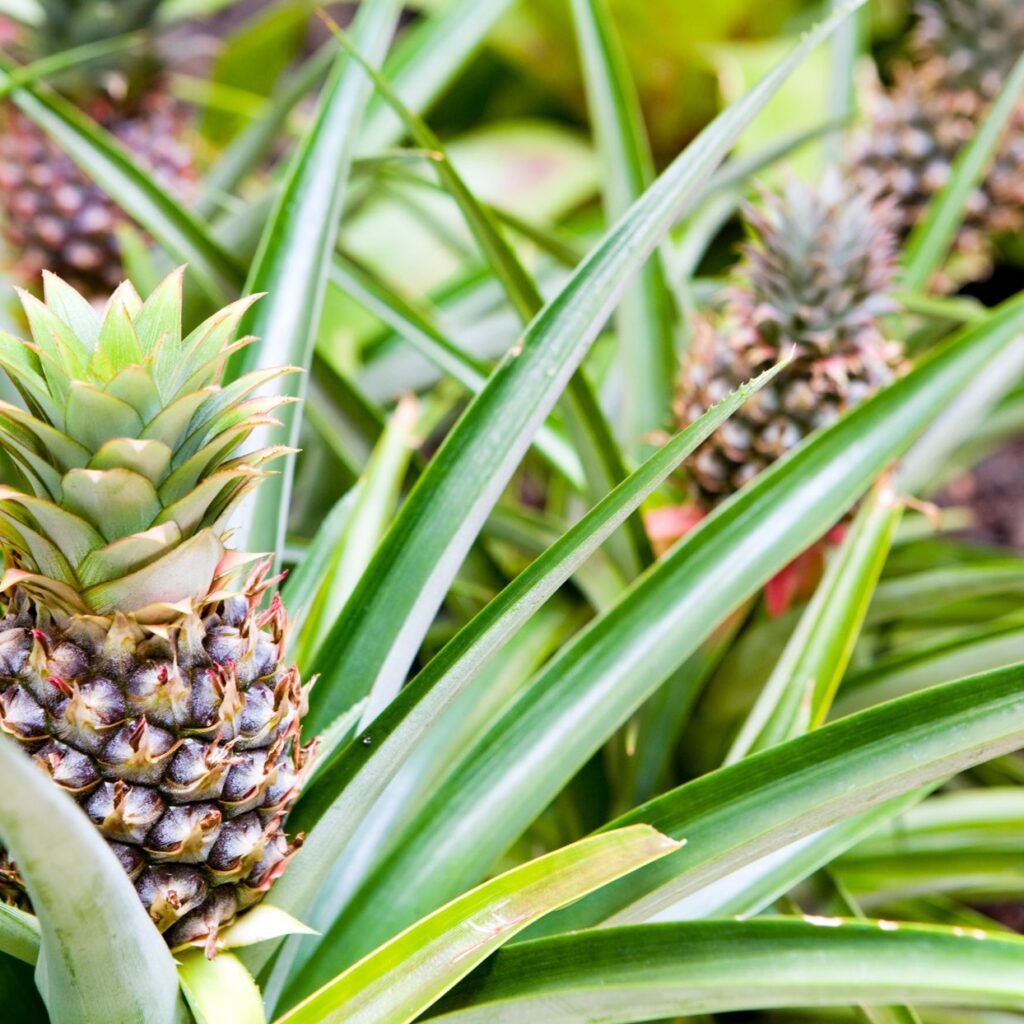
Don’t toss your plant—it can grow again!
After fruiting, the mother plant will slowly die back but produce “pups” or side shoots at its base.
Here’s what to do:
- Once pups are about 6 inches tall, cut them off gently.
- Replant them in new pots with fresh soil.
- Treat them like new pineapple crowns—your next generation of plants.
Common Indoor Pineapple Growing Problems
Even though pineapples are hardy, a few issues may pop up:
| Problem | Likely Cause | Solution |
|---|---|---|
| Brown leaf tips | Dry air or low humidity | Mist leaves occasionally |
| Soft base or rot | Overwatering | Let soil dry between waterings |
| Slow growth | Not enough light | Move closer to a window or use grow light |
| No fruit after 2 years | Lack of ethylene or nutrients | Try apple bag method & fertilize regularly |
Keep an eye on your plant’s health, and adjust your routine accordingly.
Decorating with Indoor Pineapples
Beyond fruit, indoor pineapples make beautiful tropical accents. Try these ideas:
- Decorate with style: Use woven baskets or ceramic pots for a coastal vibe.
- Cluster with other tropicals: Pair with peace lilies, bird-of-paradise, or ferns.
- Seasonal flair: Add fairy lights or small pebbles around the base for a festive look.
Your pineapple plant becomes not just a fruit source—but a living piece of home décor.
Final Thoughts
Growing pineapples indoors brings a bit of paradise to your everyday life. With a sunny window, well-draining soil, and a splash of patience, you can transform a grocery-store fruit into a lush tropical plant—and eventually, a sweet reward.
Whether or not your plant fruits, its bold leaves and exotic charm will brighten any room. And when it finally does produce that golden pineapple, you’ll taste the satisfaction of nurturing a tiny piece of the tropics right at home.
So next time you pick up a pineapple, don’t throw away the top—plant it, nurture it, and let it remind you that paradise can grow anywhere, even on your windowsill.