Few things are more discouraging for gardeners and homeowners than seeing a young tree, once healthy and full of promise, stripped bare overnight by hungry deer. Whether you live in a wooded area or on the edge of town, deer can be relentless in their search for tender shoots, bark, and buds — especially during fall and winter when food is scarce.
The good news? With the right combination of strategies, you can successfully protect your young trees and help them grow into strong, mature specimens. This comprehensive guide will walk you through everything you need to know about preventing deer damage, from understanding their behavior to installing the most effective barriers and repellents.
Why Deer Target Young Trees

Deer are beautiful creatures, but they can wreak havoc on young trees. Their damage usually comes in two forms: browsing and rubbing.
1. Browsing (Feeding Damage)
Deer love to eat soft, tender plant material — young leaves, buds, and shoots. In spring and summer, these parts are full of nutrients, making your young trees a perfect snack. This feeding can:
- Strip away the foliage needed for photosynthesis.
- Distort or stunt new growth.
- Severely weaken or even kill a sapling if browsing continues.
2. Rubbing (Antler Damage)
In late summer and fall, male deer (bucks) rub their antlers against tree trunks to remove velvet or mark their territory. This rubbing can:
- Strip bark and damage the cambium layer beneath.
- Girdle the tree (cut off nutrient flow), killing it entirely.
- Break or bend the trunk, especially in young trees.
Understanding these habits helps you design the right kind of protection for each season.
Step 1: Choose Deer-Resistant Tree Varieties

Before you even plant, start with prevention in mind. Some tree species are far less attractive to deer than others. While no tree is completely “deer-proof,” many are deer-resistant, meaning deer will only eat them when food is scarce.

Deer-resistant options include:
- Conifers: Spruce, fir, and juniper (avoid arborvitae — deer love it!)
- Hardwoods: Ginkgo, birch, beech, and honey locust
- Fruit Trees: Persimmon, pawpaw, and mulberry are less appealing
- Ornamentals: Dogwood, magnolia, and redbud
If you must plant favorites like apple, cherry, or maple, be prepared to protect them with extra care.
Step 2: Physical Barriers — The Most Reliable Defense
When it comes to keeping deer out, physical barriers are the gold standard. They provide direct, visible protection that doesn’t rely on chemicals or scents.
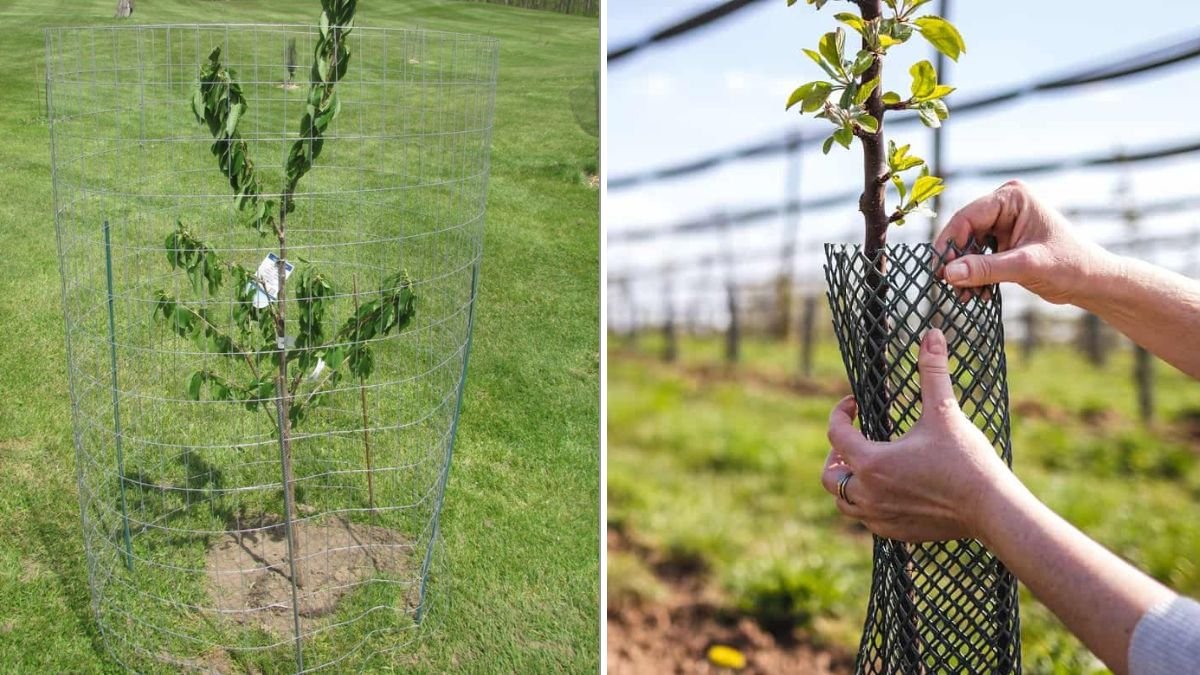
1. Tree Guards
These are protective wraps or tubes that fit snugly around the trunk.
Best for: Preventing antler rubbing and small browsing damage.
How to use:
- Choose plastic spiral guards, mesh tubes, or perforated wraps.
- Install them from the ground up to about 4 feet high.
- Ensure proper airflow to avoid rot or insect buildup.
- Remove or adjust them as the tree grows to avoid girdling.
Pro Tip: Use white or light-colored guards to prevent heat damage from the sun.
2. Wire Mesh Cages
For complete protection, surround each tree with a sturdy wire cage.

Best for: Individual young trees in open yards or gardens.
How to make one:
- Use welded wire fencing (2×4 inch openings).
- Form a cylinder about 4–6 feet in diameter and 5–6 feet tall.
- Anchor it with metal stakes.
- Leave room for the tree to grow inside without touching the wire.
This method is extremely effective and long-lasting, especially against rubbing and browsing.
3. Deer Fencing (Full Yard or Orchard Protection)
If you have multiple trees or a large property, consider installing deer fencing around the entire area.
Key requirements:
- Minimum height: 8 feet (deer can easily jump lower fences).
- Use heavy-duty polypropylene mesh or galvanized wire.
- Bury the bottom a few inches to prevent deer from pushing under.
Alternative: For smaller gardens, you can use angled fences or double-row fences (two fences spaced 3–5 feet apart). Deer dislike jumping into tight or uncertain spaces.
Step 3: Use Deer Repellents for Extra Protection

If fencing isn’t practical, repellents can help discourage deer from browsing. While not 100% foolproof, they work well when used in rotation and combined with other methods.
1. Scent-Based Repellents
These mimic predator odors or contain smells deer dislike, such as garlic, sulfur, or rotten eggs.

Examples:
- Commercial sprays (like Liquid Fence or Deer Out)
- Homemade mixtures (e.g., eggs, water, and cayenne pepper)
How to use:
- Apply every 2–3 weeks, and reapply after rain.
- Alternate products occasionally so deer don’t get used to one smell.
2. Taste-Based Repellents
These make the leaves and bark taste bitter.
Examples:
- Hot pepper sprays
- Bitrex-based solutions
How to use:
- Spray directly on foliage and twigs.
- Best for early-season protection when deer are feeding most actively.
Step 4: Landscape Strategically

Your landscape layout can make a big difference in how often deer visit your property.
1. Create “Deer-Resistant Zones.”
- Plant highly fragrant or textured shrubs (like lavender, boxwood, or barberry) around more vulnerable trees.
- These act as natural deterrents — deer dislike strong scents and prickly textures.
2. Add Visual and Physical Deterrents.
- Hanging reflective ribbons, wind chimes, or motion-activated sprinklers can scare deer away.
- Use garden statues or motion lights — deer tend to avoid unpredictable environments.
3. Maintain Open Spaces.
Deer prefer areas where they can feed and quickly retreat into cover.

- Keep the area around trees mowed and clear of tall weeds or shrubs.
- This reduces their sense of safety and discourages browsing.
Step 5: Seasonal Protection Strategies

Deer behavior changes with the seasons — so should your defense.
Spring:
- Watch for browsing on new shoots.
- Refresh repellents regularly.
- Install guards early before deer form feeding patterns.
Summer:
- Keep up watering; stressed trees attract more pests and browsing.
- Inspect cages or guards for damage and adjust for growth.
Fall:
- Antler rubbing season! Ensure trunk guards are secure.
- Check fences for weak spots.
- Consider extra deterrents like motion-activated lights.
Winter:
- Deer are hungrier when food is scarce — reinforce barriers.
- Use burlap wraps on particularly vulnerable species.
- Keep snow from piling against fences (deer can use it to jump over).
Step 6: Combining Methods for Long-Term Success
No single method is perfect on its own. The most effective deer protection plan combines multiple strategies:
- Start with deer-resistant species when possible.
- Physically protect young trunks and canopies.
- Add repellents for scent and taste deterrence.
- Use landscape design to discourage deer traffic.
By layering these defenses, you create a strong barrier that adapts to deer behavior and your local conditions.
Step 7: When Damage Already Occurred
If deer have already damaged your trees, don’t panic — many can recover with care.
For browsing damage:
- Prune broken or shredded branches cleanly.
- Apply organic mulch to conserve moisture and promote regrowth.
- Water deeply and regularly to support recovery.
For bark rubbing:
- If only part of the bark is removed, wrap it with a breathable tree bandage to prevent infection.
- If the tree is completely girdled (bark stripped all around), grafting or bridge grafting may save it — though severe damage often means replanting.
Final Thoughts: Protecting Your Trees Is Protecting Your Future
Young trees represent the future of your landscape — providing shade, fruit, beauty, and ecological value for decades to come. But until they grow strong enough to withstand nature’s challenges, they depend on your protection.

By combining barriers, repellents, and smart landscape design, you can keep deer damage under control and give your trees the chance to thrive.
In time, those fragile saplings will grow into sturdy trunks and leafy canopies — a living reward for your patience and care.