Tomatoes are one of the most rewarding crops to grow—lush green vines, clusters of fruit, and that first burst of flavor that only comes from homegrown produce. But even the healthiest tomato plant can suffer if you overwater it. While it might seem that more water equals faster growth, tomatoes are surprisingly sensitive to moisture levels. Too much water can drown their roots, invite disease, and ruin the flavor of the fruit you’ve worked so hard to grow.
This guide breaks down exactly how to tell if your tomatoes are getting too much water, what causes the problem, and how to fix it before your plants wilt beyond repair.
Why Overwatering Is a Common Tomato Problem
Tomatoes need a consistent water supply, but they also require oxygen in the soil. When the soil stays soggy, air pockets disappear, roots can’t breathe, and harmful bacteria thrive. Overwatering often happens when gardeners mistake wilted leaves for drought stress or forget that a rainy stretch counts toward a plant’s weekly water needs.
The right amount of water keeps the soil evenly moist—not soaked. A good rule of thumb is that tomato plants need 1 to 1.5 inches of water per week, including rainfall. But that number changes with soil type, container size, temperature, and humidity.
1. The Telltale Signs of Overwatered Tomatoes
If you suspect your tomatoes are drowning, look for these signs:
1.1 Wilting Despite Moist Soil
It’s easy to assume drooping leaves mean your plant is thirsty, but wilting can also happen when roots are waterlogged. Check the soil first—if it’s damp and the plant is still drooping, overwatering is likely the cause.
1.2 Yellowing Leaves
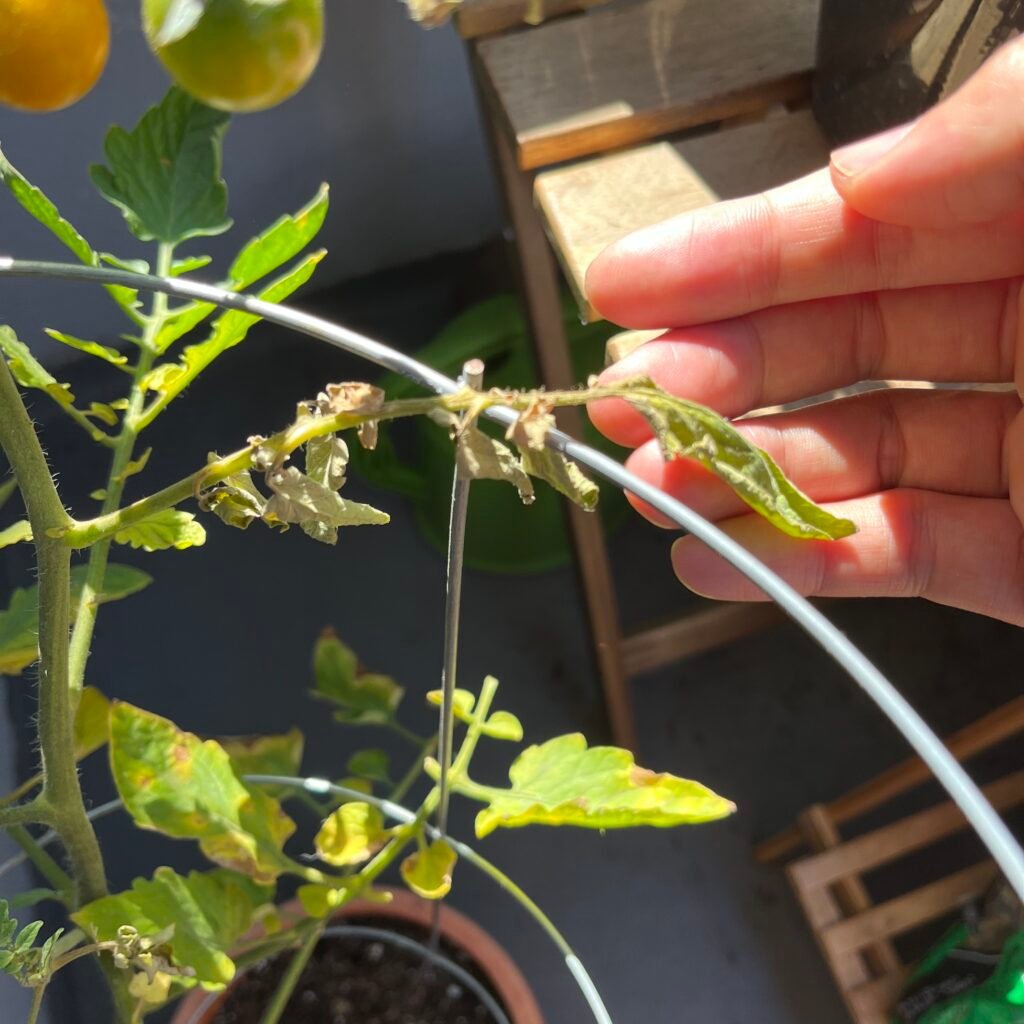
The lower leaves often turn pale green or yellow when the roots are struggling to absorb nutrients from saturated soil. The plant’s vascular system slows down, leaving foliage discolored and limp.
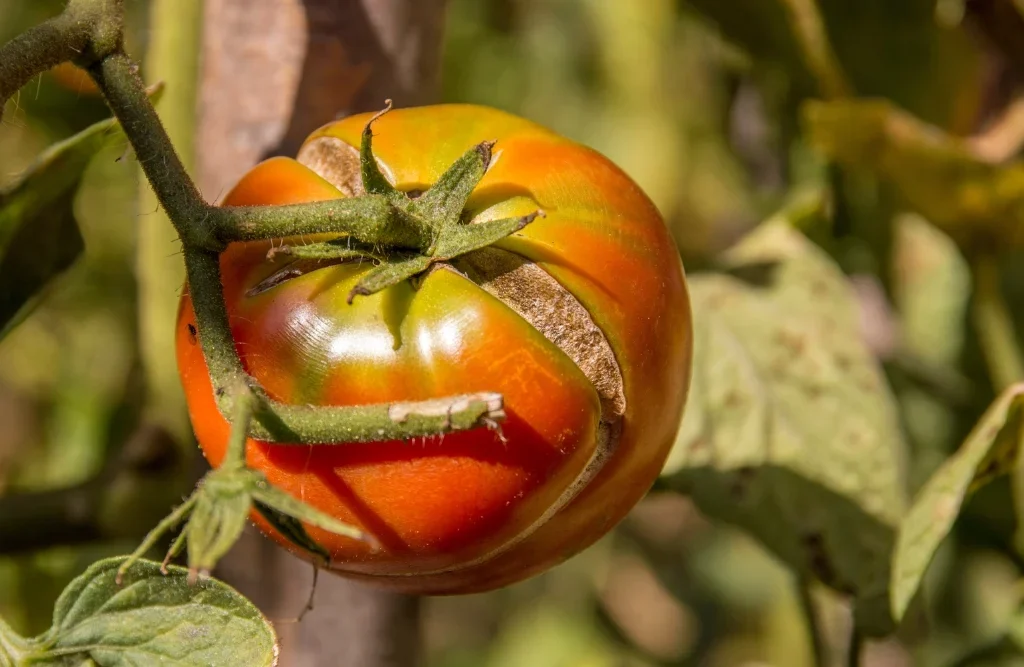
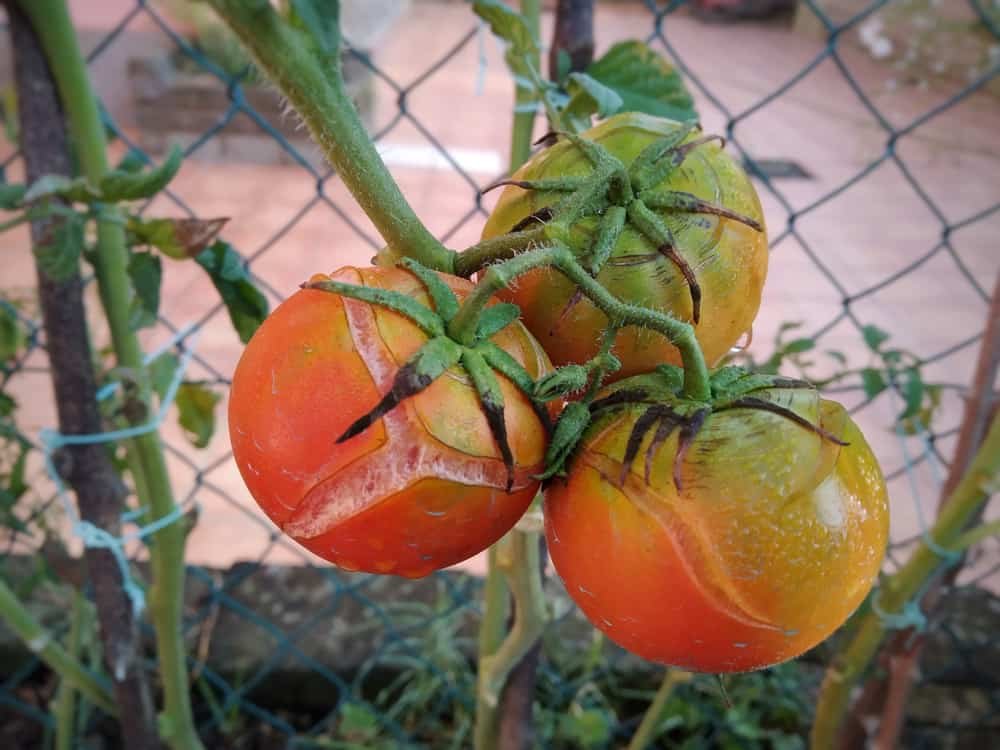
1.3 Blisters or Cracked Skin on Fruit
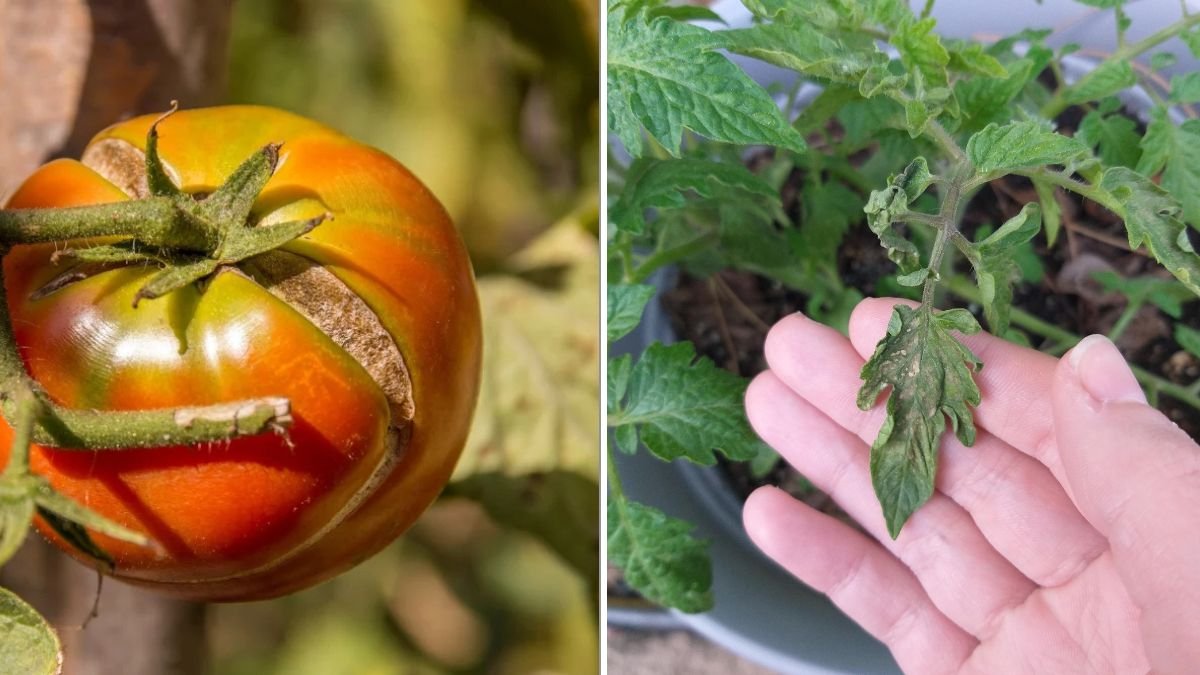
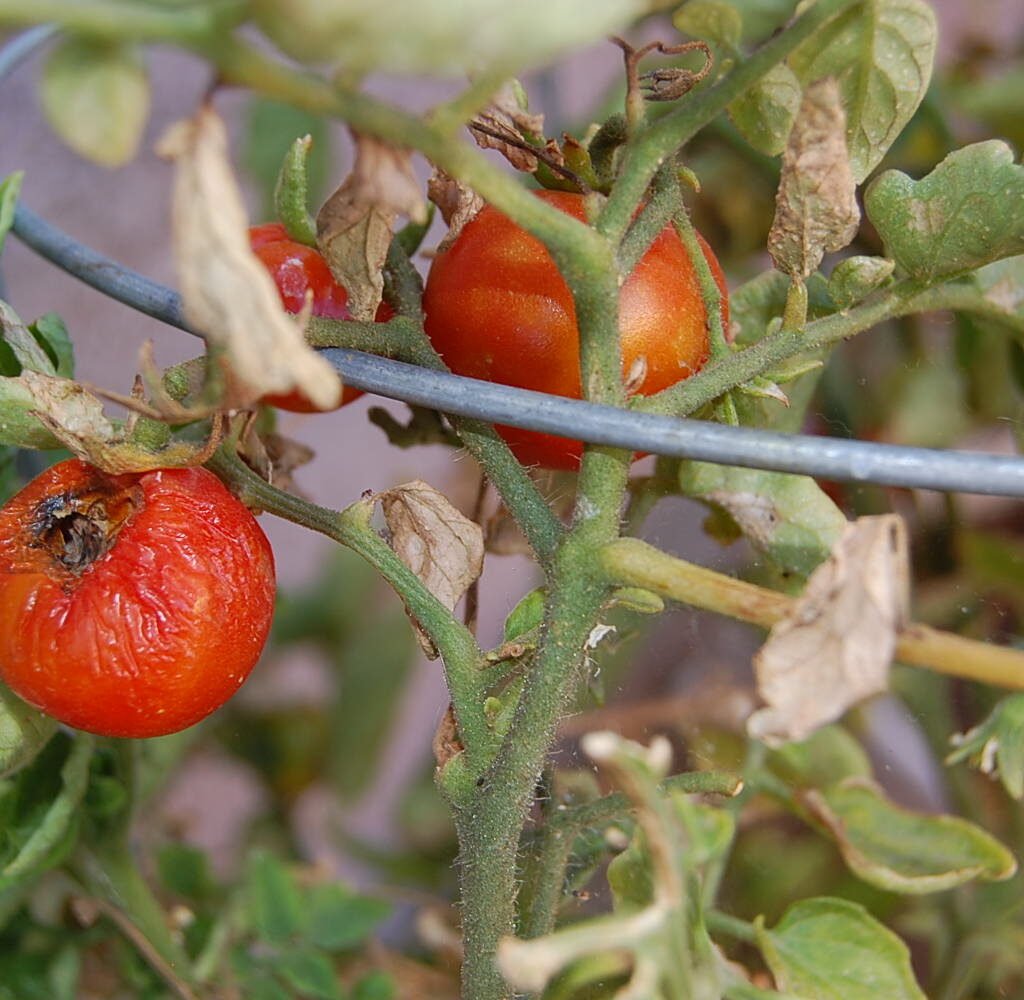
Too much water causes the fruit to swell faster than the skin can stretch, resulting in cracks or splits on ripening tomatoes. This not only affects appearance but also makes fruit more vulnerable to rot and pests.
1.4 Mold or Fungus on the Soil Surface
Constantly wet soil can encourage fungal growth. A thin layer of green or white mold on the top of the soil is a clear sign that you’re watering too often.
1.5 Root Rot and Foul Smells
When oxygen levels drop, roots start decaying. Gently dig near the base of the plant—if the roots look brown, mushy, or smell sour, root rot has likely set in.

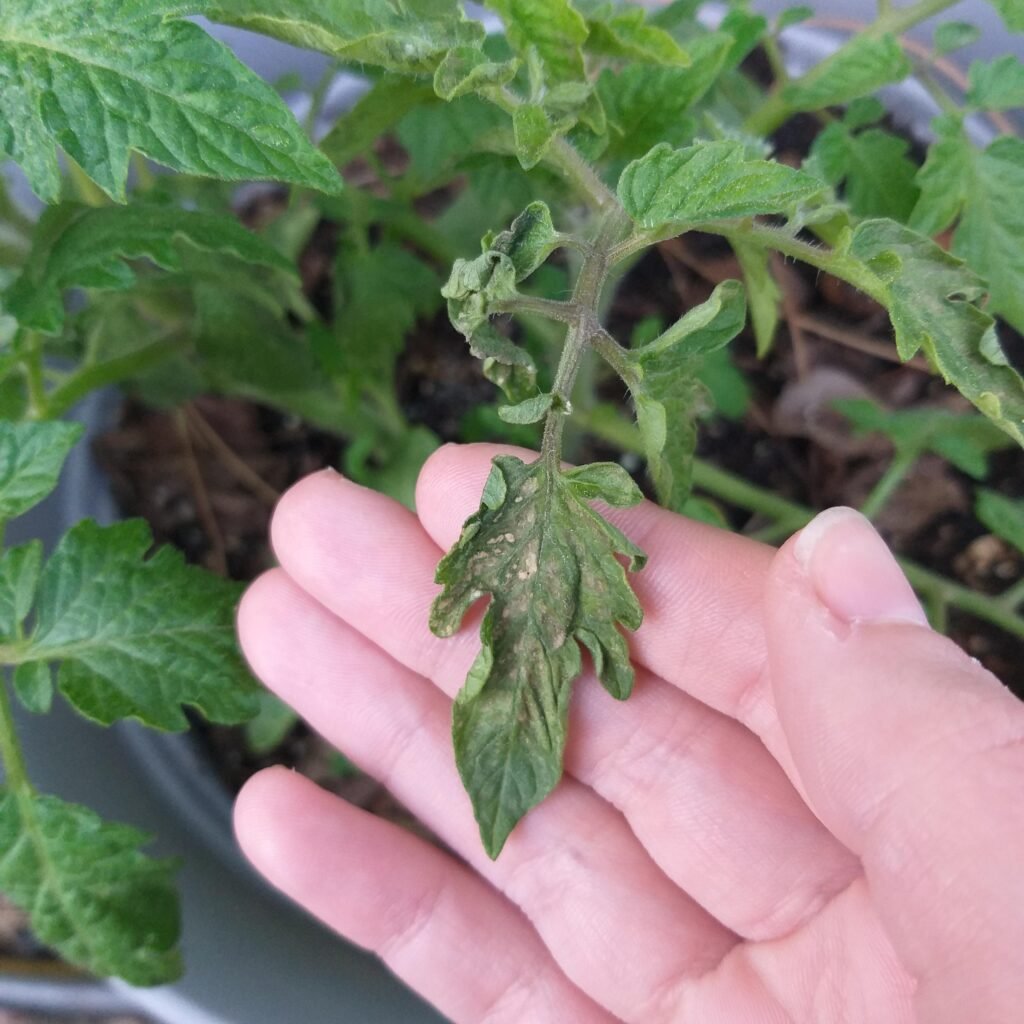
1.6 Leaf Curling and Stunted Growth
Overwatered tomatoes may develop tight, curled leaves as a stress response. They also grow slower and produce fewer blossoms because the plant directs its energy toward survival instead of fruiting.
2. The Science Behind What Happens Underground
When you overwater, the soil becomes compacted and airless. The lack of oxygen means the plant’s roots can’t perform respiration—a process that helps convert nutrients into energy. Without this energy, the tomato’s growth slows, nutrient uptake declines, and the roots begin to die back.
Meanwhile, beneficial microbes that thrive in oxygenated soil die off, and anaerobic bacteria (those that live without oxygen) take over. These bacteria release toxins that further damage the plant. The result: a sickly, stressed tomato that struggles to recover even after watering is corrected.
3. How to Test Soil Moisture Correctly
Avoid guessing how wet your soil is. Here are reliable ways to test:
- Finger Test: Stick your finger 2 inches into the soil. If it feels wet or cool at that depth, hold off on watering.
- Soil Moisture Meter: These inexpensive tools give a quick digital reading. Aim for a “moist” level, not “wet.”
- Weight Test for Containers: Lift your pot after watering and again when dry. Over time, you’ll learn the difference in weight and know when your plant truly needs more water.
If you garden in raised beds or containers, remember that soil dries out faster than in-ground plots—so watering habits must adjust accordingly.

4. Fixing Overwatered Tomatoes
Catching the problem early makes recovery possible. Here’s how to help your plants bounce back:
4.1 Stop Watering Temporarily
Pause watering for several days and let the soil dry naturally. Don’t let it bake completely dry—just return to a balanced moisture level.
4.2 Improve Drainage
If your soil stays soggy, amend it with organic matter like compost or peat moss to improve structure and drainage. Raised beds or containers should have drainage holes at the bottom to allow excess water to escape.
4.3 Loosen Compacted Soil
Gently aerate the top inch or two around the base of the plant. This helps oxygen reach the roots. Avoid digging too deeply near the stem, as that can damage the root system.
4.4 Mulch Wisely
Mulch helps regulate moisture, but using too much can trap water. Stick to a thin 1–2 inch layer of straw or shredded leaves once the soil has dried out.
4.5 Prune Damaged Leaves
Cut away yellowed or diseased foliage to help the plant redirect its energy toward healthy growth and new blooms.
4.6 Feed Sparingly After Stress
Once recovery begins, offer a balanced liquid fertilizer at half strength to encourage root regrowth and fruit production. Avoid overfertilizing, which can further stress the plant.
5. Preventing Overwatering in the Future
Once your tomatoes recover, take these preventive steps to keep them thriving:
- Create a Watering Schedule: Water deeply two to three times per week rather than lightly every day. This encourages strong, deep roots.
- Water Early in the Day: Morning watering reduces evaporation and allows foliage to dry, lowering the risk of fungal diseases.
- Use Drip Irrigation or Soaker Hoses: These systems deliver moisture directly to the roots without oversaturating the soil.
- Watch the Weather: Skip watering after rain. Use a rain gauge to track weekly totals.
- Choose the Right Soil Mix: In containers, use a well-draining potting mix labeled for vegetables. Garden soil alone can compact and hold too much moisture.
- Elevate Containers: Lift pots slightly off the ground using bricks or pot feet to prevent water from pooling underneath.
6. Distinguishing Between Overwatering and Underwatering
The symptoms can look similar, but there are key differences:
| Symptom | Overwatering | Underwatering |
|---|---|---|
| Leaf color | Yellow or pale green | Dry and brown edges |
| Soil feel | Wet or cool | Dry and crumbly |
| Fruit | Cracks or splits | Small, dry, or with blossom-end rot |
| Root condition | Brown and mushy | Dry and brittle |
When in doubt, always check the soil before watering. It’s better to err on the side of slightly dry than too wet—tomatoes recover faster from mild drought than from root rot.
7. The Payoff of Proper Watering
Once you find the right watering balance, your tomato plants will reward you with lush foliage, strong stems, and flavorful fruit. Consistent moisture levels lead to:
- Better-tasting tomatoes with richer color and fewer cracks
- Stronger roots that resist disease
- More abundant harvests through healthy flowering and fruit set
Proper watering is the foundation of tomato success. The secret is to water deeply but infrequently, ensuring the soil dries slightly between sessions.
Final Thoughts
Tomato plants are resilient, but they have their limits. Overwatering can quietly undo weeks of hard work by suffocating the roots and spoiling your harvest. The good news is that once you recognize the signs—wilted leaves, yellowing foliage, and cracked fruit—you can take quick action to restore balance.
Remember, tomato gardening is as much about observation as it is about care. Learn to “read” your plants, test your soil often, and let nature do part of the work. With a little patience and consistency, you’ll find that sweet spot where your tomatoes flourish—neither parched nor drowning, but perfectly quenched and ready to thrive all season long.